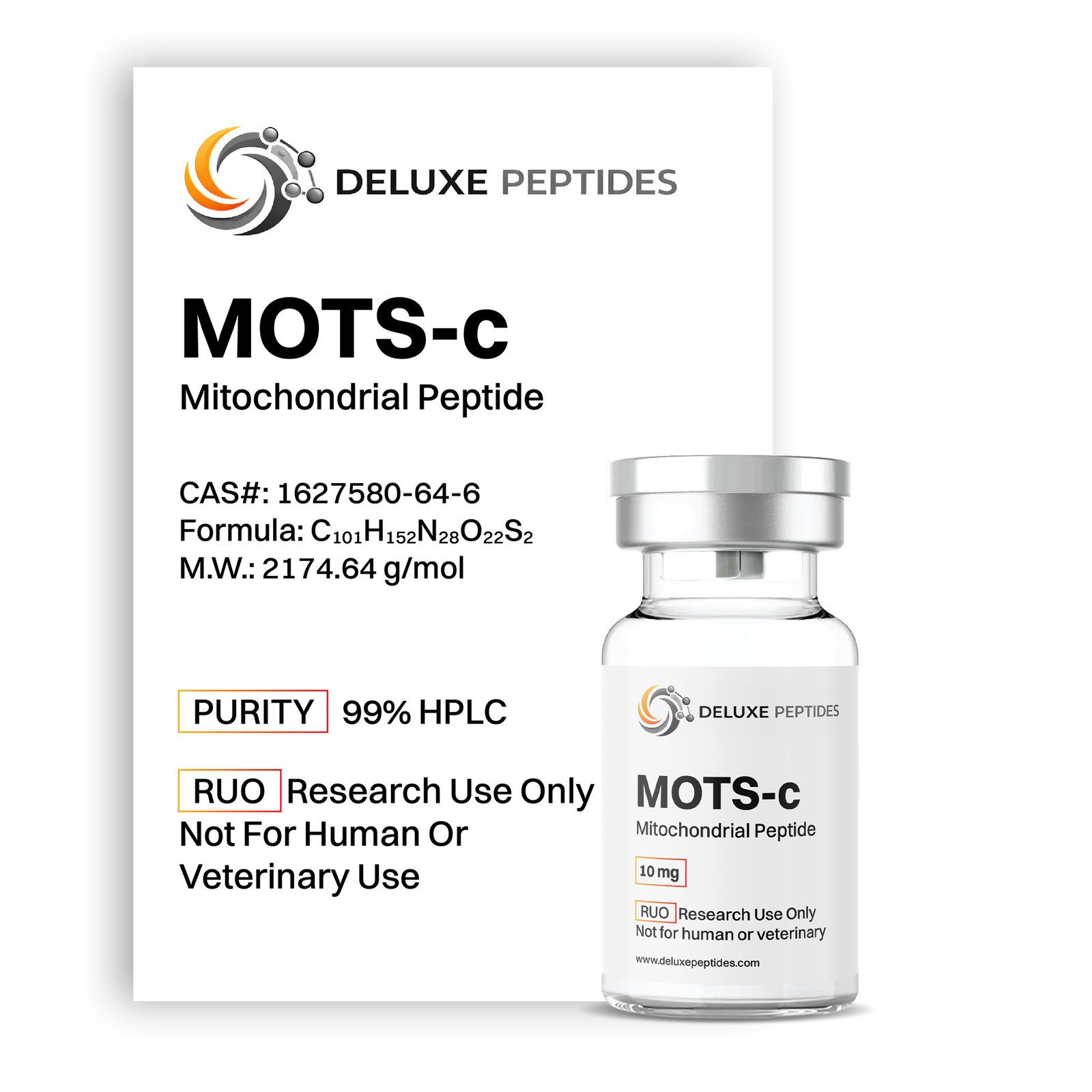
MOTS-c 10mg is a synthetic peptide fragment derived from a mitochondrial-encoded sequence and investigated in controlled laboratory environments for its interaction with cellular metabolic signaling pathways. In experimental biological systems, MOTS-c 10mg is examined for its influence on intracellular communication networks associated with energy regulation, metabolic stress signaling, and mitochondrial-associated transcriptional responses.
MOTS-c is categorized as a mitochondrial-derived peptide (MDP) and is studied in research models exploring cellular homeostasis, stress adaptation mechanisms, and metabolic pathway modulation. Laboratory investigations evaluate how MOTS-c 10mg interacts with AMP-activated protein kinase (AMPK) signaling cascades and nuclear gene expression pathways under defined in vitro and in vivo experimental conditions.
Research Overview
MOTS-c 10mg has been examined in preclinical models designed to analyze mitochondrial signaling behavior and metabolic regulation mechanisms. Scientific research frameworks focus on intracellular energy-sensing pathways and peptide-driven transcriptional regulatory responses within controlled biological systems.
Investigators frequently assess:
• AMPK pathway activation markers
• Mitochondrial-nuclear communication signaling
• Glucose metabolism–associated pathways
• Cellular stress response indicators
• Metabolic transcription factor modulation
Research involving MOTS-c 10mg emphasizes molecular reproducibility, structural stability, and batch-consistent analytical verification for laboratory research applications.
Mechanism of Study
The mechanism of study for MOTS-c 10mg centers on mitochondrial-derived peptide signaling and its influence on intracellular energy-regulation pathways. Experimental systems evaluate how MOTS-c interacts with metabolic stress sensors and transcription-associated regulatory networks.
Laboratory studies may monitor:
• AMPK signaling cascade activity
• Intracellular metabolic response markers
• Nuclear transcription factor interaction
• Oxidative stress–related signaling indicators
• Cellular adaptation pathways
MOTS-c 10mg is examined strictly within research environments to better understand peptide-mediated mitochondrial signaling behavior and its influence on metabolic communication systems.
Structural Characteristics
MOTS-c is a short peptide encoded within mitochondrial DNA and synthesized for research applications under controlled laboratory standards. Analytical characterization of MOTS-c 10mg includes verification of peptide sequence integrity, molecular weight confirmation, and chromatographic purity validation.
High-Performance Liquid Chromatography (HPLC) and mass spectrometry are commonly utilized to confirm structural consistency and purity levels prior to research distribution.
Applications in Research
MOTS-c 10mg is utilized in experimental systems investigating mitochondrial-derived signaling peptides and metabolic regulatory models. Research applications may include analysis of:
• Intracellular energy-sensing pathways
• Mitochondrial-to-nuclear signaling communication
• Metabolic stress response adaptation
• Cellular regulatory signaling cascades
• Transcriptional modulation patterns
Scientific investigations emphasize reproducibility across experimental frameworks and consistent peptide characterization through validated analytical methods.
Product Specifications
• 10mg per vial
• Synthetic mitochondrial-derived peptide
• Lyophilized powder for enhanced stability
• ≥99% HPLC verified purity
• Third-party tested
• Research use only
• Store at -20°C
MOTS-c 10mg is supplied in lyophilized form to preserve structural integrity during storage and transportation. Proper laboratory handling procedures are recommended to maintain stability prior to experimental preparation.
Certificate of Analysis
Each batch of MOTS-c 10mg undergoes independent analytical verification to confirm purity and structural identity. High-Performance Liquid Chromatography (HPLC) testing confirms ≥99% purity prior to release for research distribution.
Additional analytical characterization may include peptide mapping and mass spectrometry analysis to verify molecular structure consistency.
Laboratory Handling & Storage
MOTS-c 10mg should be stored at -20°C in a temperature-controlled laboratory environment prior to reconstitution. Lyophilized peptide compounds are designed to maintain structural stability when handled according to established laboratory protocols.
Following reconstitution for research applications, investigators typically follow validated laboratory procedures to preserve peptide integrity and confirm structural stability through analytical verification.
Frequently Asked Questions
Q: Is MOTS-c 10mg intended for human consumption?
A: No. This compound is strictly intended for laboratory research use only.
Q: What pathways are commonly studied?
A: Research frequently evaluates AMPK-associated signaling and mitochondrial-nuclear communication pathways.
Q: How is purity verified?
A: Purity is confirmed using validated High-Performance Liquid Chromatography (HPLC) testing procedures.
For research use only. Not for human consumption.