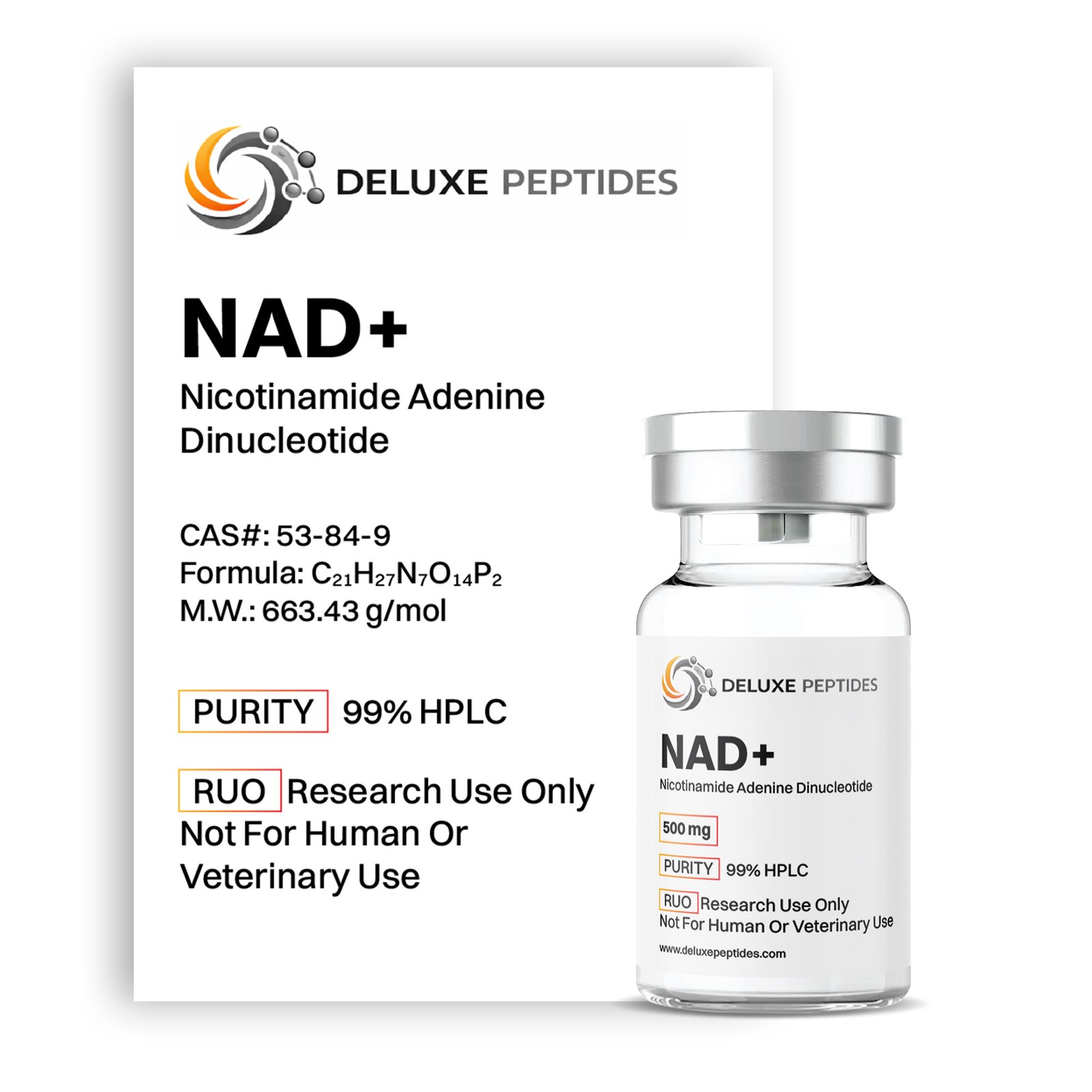
Overview of NAD+ 500mg
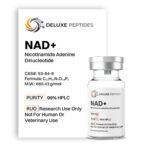
NAD+ 500mg (Nicotinamide Adenine Dinucleotide) is a high-purity laboratory research compound central to cellular energy metabolism and redox biology. NAD+ is an essential coenzyme present in all living cells and plays a fundamental role in electron transfer reactions that support ATP production and mitochondrial function.
In laboratory research environments, NAD+ 500mg is utilized to investigate metabolic pathway regulation, oxidative phosphorylation dynamics, and intracellular signaling networks associated with cellular homeostasis.
Supplied in lyophilized sterile form for enhanced stability, NAD+ 500mg is intended strictly for laboratory research and analytical applications.
Molecular and Biochemical Characteristics
NAD+ is composed of two nucleotides joined through their phosphate groups:
-
One nucleotide contains adenine
-
The other contains nicotinamide
In research systems, NAD+ acts as:
-
An electron carrier in redox reactions
-
A cofactor for dehydrogenase enzymes
-
A regulator of sirtuin enzyme activity
-
A substrate for poly(ADP-ribose) polymerase (PARP) enzymes
-
A mediator of intracellular metabolic signaling
The oxidized form (NAD+) and reduced form (NADH) function together to maintain cellular redox balance in experimental metabolic models.
Mechanism of Action (Research Context)
In controlled laboratory systems, NAD+ 500mg participates in critical biochemical pathways, including:
1. Oxidative Phosphorylation
NAD+ accepts electrons during glycolysis and the tricarboxylic acid (TCA) cycle, forming NADH. NADH subsequently donates electrons to the electron transport chain within mitochondria, supporting ATP synthesis modeling in vitro.
2. Sirtuin Activation
NAD+ serves as a substrate for sirtuin enzymes (SIRT family), which regulate transcription factors and cellular stress-response pathways. Laboratory investigations frequently explore NAD+-dependent deacetylation reactions associated with metabolic regulation.
3. PARP-Mediated DNA Repair
NAD+ is required for poly(ADP-ribose) polymerase (PARP) enzyme activity in experimental DNA repair pathway studies.
4. Redox Homeostasis
NAD+/NADH ratio is a critical parameter in metabolic research models evaluating cellular oxidative balance.
Research Applications
NAD+ 500mg is frequently referenced in laboratory investigations involving:
-
Mitochondrial function studies
-
Cellular bioenergetics research
-
Oxidative phosphorylation modeling
-
Redox balance analysis
-
Sirtuin signaling pathway research
-
DNA repair mechanism investigations
-
Metabolic transcriptional regulation studies
In molecular biology laboratories, NAD+ serves as a foundational compound for evaluating metabolic flux and intracellular energy regulation.
Researchers studying cellular metabolism commonly consult peer-reviewed databases such as the National Center for Biotechnology Information (NCBI) for foundational literature on NAD+ biology.
Stability and Laboratory Handling
NAD+ 500mg is supplied as a lyophilized sterile powder to preserve chemical stability and minimize hydrolytic degradation prior to reconstitution.
Laboratory handling recommendations include:
-
Store under recommended refrigerated conditions
-
Protect from moisture and light
-
Avoid repeated freeze–thaw cycles
-
Reconstitute using sterile laboratory-grade solvent
-
Follow institutional handling protocols
Lyophilization supports long-term stability and consistent performance in structured experimental systems.
Product Specifications
-
Compound: NAD+ (Nicotinamide Adenine Dinucleotide)
-
Classification: Cellular coenzyme / metabolic research compound
-
Strength: 500mg
-
Form: Lyophilized sterile powder
-
Appearance: White to off-white solid
-
Storage: Refrigerated conditions recommended
-
Intended Use: Laboratory research only
Analytical Verification
Each batch of NAD+ 500mg undergoes analytical verification to confirm identity and purity. Testing methodologies may include:
-
High-performance liquid chromatography (HPLC)
-
Spectrometric analysis
-
Purity validation
-
Batch consistency testing
Lot identification numbers are assigned to support traceability within structured research documentation systems.
Broader Scientific Context
NAD+ 500mg is widely referenced in laboratory research exploring metabolic signaling networks, mitochondrial biology, and cellular stress-response pathways. As a central coenzyme in energy metabolism, NAD+ remains a core focus of biochemical and molecular research.
Its role in redox reactions and intracellular signaling makes NAD+ a foundational compound for experimental metabolic modeling.
Compliance Notice
NAD+ 500mg is intended strictly for laboratory research use.
This product is not approved for human consumption, therapeutic application, or clinical use. It is sold exclusively for in vitro research, analytical testing, and scientific investigation by qualified professionals.