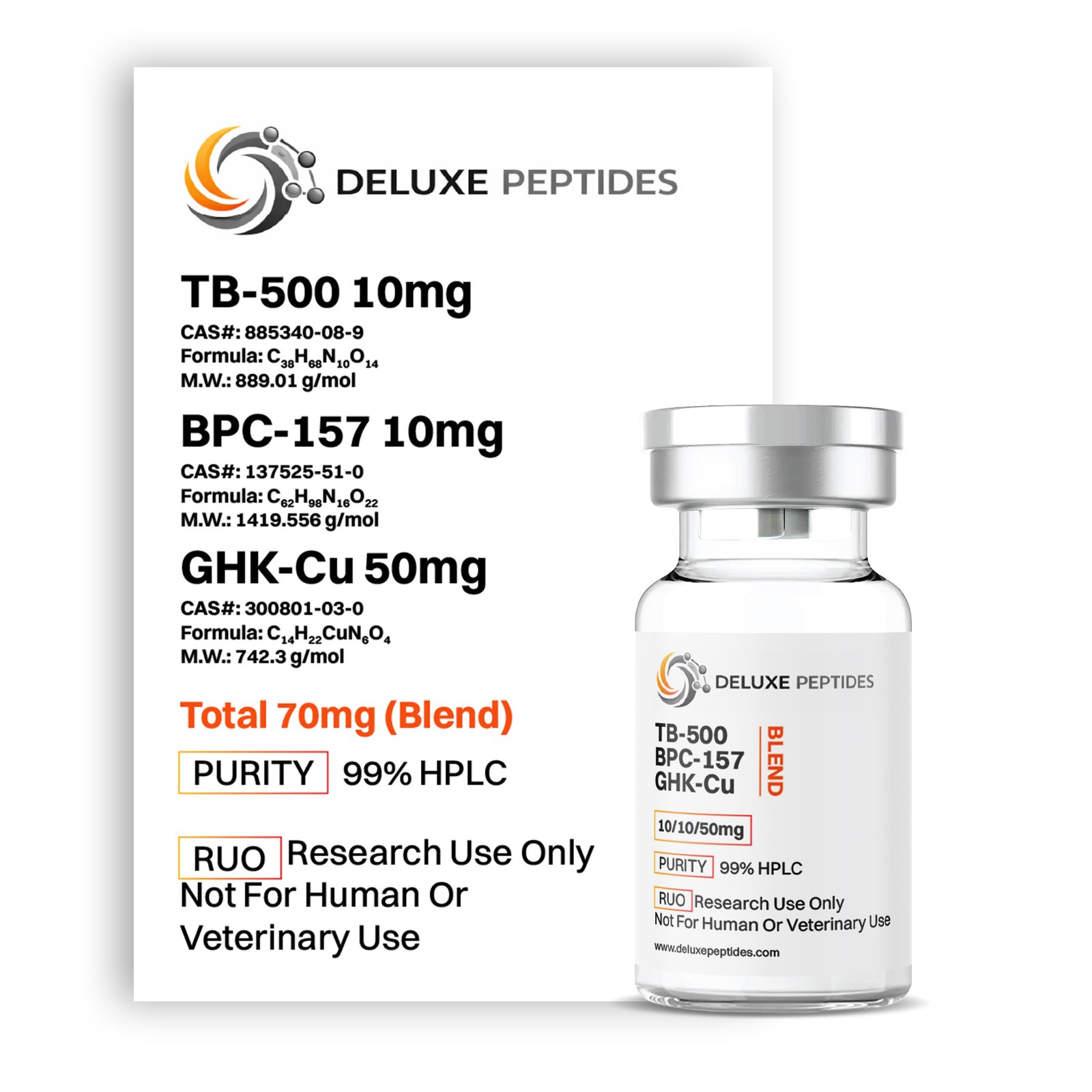
Overview of Glow Blend 70mg
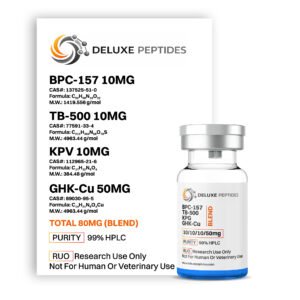
BPC-157, TB-500, GHK-Cu (Glow Blend) 70mg is an advanced multi-peptide research formulation designed for laboratory investigation of cytoskeletal regulation, extracellular matrix (ECM) signaling, and peptide–metal interaction pathways. By combining three structurally distinct research peptides frequently studied in cellular remodeling and structural signaling models, this blend supports integrated pathway evaluation in controlled experimental systems.
The 70mg format provides expanded peptide content for extended in vitro studies, multi-phase experimental designs, and structured intracellular signaling investigations. Supplied in lyophilized sterile powder form, this formulation is intended strictly for laboratory research applications.
Component Peptide Analysis
BPC-157
BPC-157 is a synthetic 15–amino acid peptide fragment studied extensively in laboratory environments for its involvement in:
-
Nitric oxide (NO) pathway modeling
-
Growth factor signaling cascade analysis
-
Angiogenic signaling research
-
Intracellular transcriptional regulation studies
In experimental systems, BPC-157 is used to explore how peptide signaling interfaces with endothelial-related pathways and intracellular repair-associated mechanisms. Researchers frequently evaluate its interaction with VEGF-associated signaling models and nitric oxide modulation pathways.
TB-500 (Thymosin Beta-4 Derived Peptide)
TB-500 corresponds to a synthetic version of the Thymosin Beta-4 sequence and is widely referenced in research involving:
-
G-actin binding and sequestration
-
Regulation of actin polymerization
-
Cytoskeletal reorganization
-
Cellular migration pathway modeling
Thymosin Beta-4–related peptides play a critical role in cytoskeletal architecture studies. In laboratory models, TB-500 is frequently utilized to evaluate how actin-binding peptides influence intracellular structural organization and dynamic cell motility processes.
GHK-Cu
GHK-Cu (Gly-His-Lys–Copper complex) is a copper-binding tripeptide studied in biochemical research for its involvement in:
-
Metalloprotein pathway modulation
-
Collagen-associated signaling models
-
Redox balance investigation
-
Transcription factor pathway analysis
The copper complex structure allows researchers to examine peptide–metal interactions within cellular signaling networks. GHK-Cu is often investigated in experimental systems evaluating extracellular matrix regulation and metalloproteinase-associated pathways.
Coordinated Mechanistic Framework (Research Context)
When examined together, BPC-157, TB-500, and GHK-Cu provide a comprehensive platform for investigating overlapping and complementary signaling pathways.
Laboratory investigations utilizing this blend may explore:
-
Actin cytoskeletal remodeling dynamics
-
Matrix metalloprotein pathway regulation
-
Nitric oxide–associated signaling integration
-
Redox-associated transcriptional modulation
-
Peptide–metal biochemical interactions
-
Cellular migration and extracellular matrix adaptation
This coordinated multi-peptide system allows researchers to evaluate intracellular signaling integration across structural and transcriptional regulatory pathways within in vitro experimental environments.
Research Applications
Glow Blend 70mg is frequently referenced in laboratory investigations involving:
-
Extracellular matrix pathway research
-
Cytoskeletal remodeling studies
-
Actin polymerization modeling
-
Metalloprotein signaling analysis
-
Redox biology investigations
-
Multi-peptide signaling synergy research
-
Structural cellular pathway modeling
In molecular and cellular biology laboratories, this blend serves as a model system for studying integrated peptide-driven pathway coordination.
Researchers examining cytoskeletal proteins and matrix signaling frequently consult peer-reviewed resources such as the National Center for Biotechnology Information (NCBI) for foundational literature related to actin-binding proteins and peptide-mediated signaling.
Stability and Laboratory Handling
BPC-157, TB-500, GHK-Cu (Glow Blend) 70mg is supplied as a lyophilized sterile powder to preserve peptide stability and minimize hydrolytic degradation before reconstitution.
Recommended laboratory handling procedures include:
-
Store under refrigerated conditions as specified
-
Protect from moisture and light exposure
-
Avoid repeated freeze–thaw cycles
-
Reconstitute using sterile laboratory-grade solvent
-
Follow institutional peptide handling guidelines
Lyophilization ensures molecular integrity and reproducibility across extended research protocols.
Product Specifications
-
Compounds: BPC-157, TB-500, GHK-Cu
-
Total Strength: 70mg
-
Classification: Multi-peptide regenerative signaling research blend
-
Form: Lyophilized sterile powder
-
Appearance: White to off-white solid
-
Storage: Refrigerated conditions recommended
-
Intended Use: Laboratory research only
Analytical Verification
Each batch of Glow Blend 70mg undergoes analytical verification to confirm identity and purity. Standard quality control procedures may include:
-
High-performance liquid chromatography (HPLC)
-
Mass spectrometry analysis
-
Structural sequence validation
-
Batch consistency testing
Lot identification numbers are assigned to ensure traceability and documentation within structured research environments.
Broader Scientific Context
Glow Blend 70mg integrates three peptides frequently studied in cellular structural regulation and signaling research. By combining actin-binding dynamics, nitric oxide pathway modeling, and peptide–metal interaction analysis, this formulation supports comprehensive experimental investigation of intracellular pathway coordination.
Such multi-peptide systems contribute to deeper understanding of how structural and transcriptional signaling networks interact within controlled laboratory biology frameworks.
Compliance Notice
BPC-157, TB-500, GHK-Cu (Glow Blend) 70mg is intended strictly for laboratory research use.
This product is not approved for human consumption, therapeutic application, or clinical use. It is sold exclusively for in vitro research, analytical testing, and scientific investigation by qualified professionals.