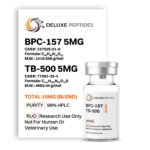
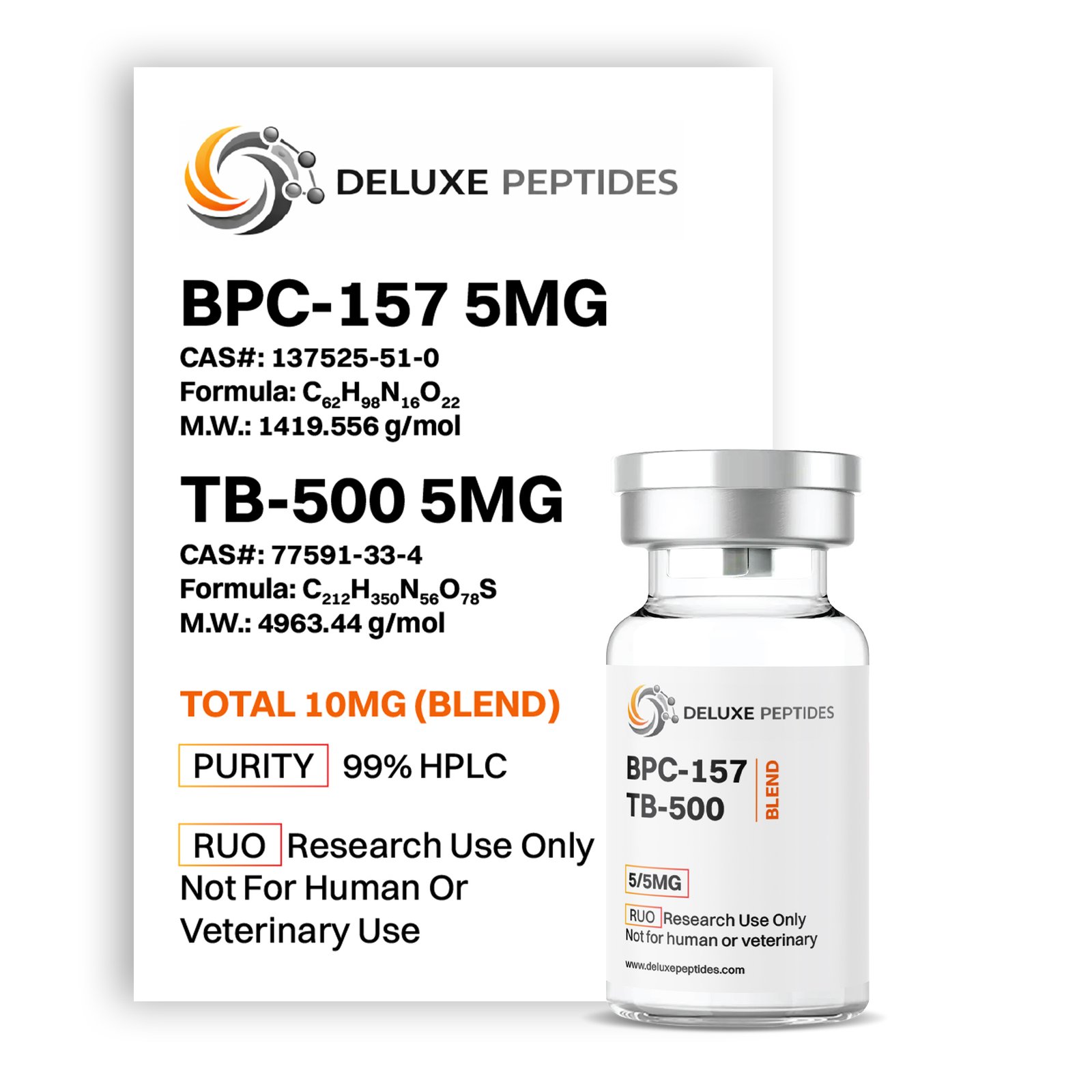
BPC-157 TB-500 10mg is a dual-peptide research compound combining two extensively studied synthetic peptides within a single lyophilized formulation. In controlled laboratory environments, BPC-157 TB-500 10mg is investigated for its interaction with intracellular signaling pathways associated with cellular communication, angiogenesis-related markers, and cytoskeletal regulation mechanisms.
This research formulation contains BPC-157, a synthetic pentadecapeptide derived from a gastric protein fragment, alongside TB-500, a synthetic version of thymosin beta-4–derived peptide sequences studied for their influence on actin-binding dynamics. Laboratory investigations evaluate how these two peptide compounds may interact within defined experimental systems under controlled in vitro and in vivo research conditions.
Research Overview
BPC-157 TB-500 10mg has been examined in preclinical research models exploring peptide-mediated signaling cascades, extracellular matrix communication networks, and cellular migration pathways. Scientific interest centers on the combined signaling behavior of these peptides within experimental biological systems.
BPC-157 is commonly studied for its interaction with nitric oxide–associated pathways, vascular signaling markers, and growth factor–related intracellular cascades. TB-500 is investigated for its role in actin-binding protein regulation and cellular structural signaling mechanisms.
In laboratory settings, the combination of BPC-157 TB-500 10mg is analyzed to better understand how multiple peptide pathways may operate within shared intracellular signaling environments. Researchers monitor transcriptional responses, kinase activity markers, and cytoskeletal signaling frameworks during experimental evaluation.
Mechanism of Study
The mechanism of study for BPC-157 TB-500 10mg involves evaluation of nitric oxide signaling pathways, angiogenesis-associated markers, and actin-regulatory protein interactions within controlled laboratory models.
BPC-157 research frequently focuses on VEGF-associated signaling cascades, endothelial communication markers, and intracellular phosphorylation events. TB-500 research centers on actin cytoskeleton modulation and peptide-mediated structural regulation processes.
When examined together in experimental systems, investigators assess intracellular signaling overlap, structural communication markers, and molecular stability within defined biological environments. These studies are conducted exclusively for laboratory research purposes.
Applications in Research
BPC-157 TB-500 10mg is utilized in experimental models investigating angiogenesis-related pathways, extracellular matrix communication, cytoskeletal regulation, and intracellular signaling networks. Researchers may evaluate gene expression responses, cellular migration markers, and actin-associated signaling pathways when studying this combination peptide formulation.
Laboratory protocols emphasize reproducibility, structural consistency, and pathway specificity across research models. Analytical studies assess receptor interaction dynamics, molecular stability, and intracellular regulatory markers.
Product Specifications
• 10mg combined peptide formulation
• Lyophilized powder for enhanced stability
• ≥99% HPLC verified purity
• Third-party tested
• Research use only
• Store at -20°C
BPC-157 TB-500 10mg is supplied in lyophilized form to preserve molecular integrity during storage and transit. Proper laboratory handling procedures are recommended to maintain peptide stability prior to experimental preparation.
Certificate of Analysis
Each batch of BPC-157 TB-500 10mg undergoes independent analytical verification to confirm purity and structural identity. High-Performance Liquid Chromatography (HPLC) testing confirms ≥99% purity prior to distribution for research purposes.
Additional analytical characterization methods may include mass spectrometry and peptide mapping procedures to validate molecular weight accuracy and sequence consistency. Certificates of Analysis may be available upon request for laboratory documentation.
Laboratory Handling & Storage
BPC-157 TB-500 10mg should be stored at -20°C in a temperature-controlled laboratory environment prior to reconstitution. Lyophilized peptide compounds are formulated to maintain stability when handled according to validated laboratory standards.
Upon preparation for experimental procedures, researchers typically follow established laboratory protocols to preserve structural integrity and ensure reliable analytical outcomes.
Analytical Characterization
BPC-157 TB-500 10mg is characterized using chromatographic and molecular analytical techniques designed to verify purity levels and peptide sequence integrity. HPLC testing confirms purity specifications prior to release.
Research laboratories may utilize additional techniques such as mass spectrometry to validate molecular structure and consistency across batches.
Frequently Asked Questions
Q: Is BPC-157 TB-500 10mg intended for human consumption?
A: No. This compound is strictly intended for laboratory research use only.
Q: What pathways are studied with this blend?
A: Research commonly examines nitric oxide signaling pathways, angiogenesis-associated markers, cytoskeletal regulation mechanisms, and intracellular communication networks.
Q: How is purity verified?
A: Purity is confirmed through validated High-Performance Liquid Chromatography (HPLC) testing procedures.
For research use only. Not for human consumption.